Speaker Series 14
Recording
The fourteenth DevSCA Speaker Series presentation was live-streamed in June 2026. The live stream recording is embedded above.
Abstracts
Positive Youth Development (PYD) Among Indigenous Youth:
Strengthening Environmental Conservation and Community-Based Ecotourism in the Sierra Madre Alta Ancestral Domain through the Youth-Driven Indigenous Conservation and Ecotourism Stewardship Model (YICESM)
Eden H. Terol
Indigenous communities continue to face intensifying pressures from environmental degradation, cultural erosion, and externally driven ecotourism development. Although community-based conservation and ecotourism models are widely documented in the literature, the systematic positioning of Indigenous youth as central ecological and cultural stewards remains underexplored. This paper develops the Youth-Driven Indigenous Conservation and Ecotourism Stewardship Model (YICESM), a conceptual framework grounded in Positive Youth Development (PYD) and Indigenous ecological knowledge. Drawing on a qualitative study using Indigenous methodologies involving 34 Alta Indigenous youth (10–25 years old) in the Sierra Madre Alta Ancestral Domain in the Philippines, the model highlights youth leadership across three interconnected domains: environmental stewardship, cultural knowledge transmission, and sustainable livelihood formation. The study argues that positioning Indigenous youth as active agents—rather than peripheral beneficiaries—can strengthen conservation outcomes, support cultural continuity, and enhance the long-term sustainability of community-based ecotourism initiatives. Situated within broader discussions on Indigenous governance, conservation, and political ecology, the YICESM contributes a youth-centered analytical lens for understanding Indigenous-led conservation futures. Findings may inform policy development and community-based programs that promote Indigenous youth participation in environmental conservation and ecotourism management, as well as capacity-building initiatives such as microcredential programs for sustainable development.
The Climate Action Collective:
How Burlington College Students Collaborate to Create Grassroots Change
Aria Wetzel & Emily Bennett
In a time of climate uncertainty, it is important to understand how to get involved and feel like you are making a difference. The Climate Action Collective (CAC), sponsored by 350VT, is a grassroots group of students who work to strengthen community connections and create innovative local solutions to the climate crisis. The CAC is primarily composed of students from the University of Vermont, Champlain College, and Saint Michael's College. This presentation will provide an overview of some of the work the CAC has accomplished, our experiences and takeaways as Co-Directors, and our goals for the future.
Speakers
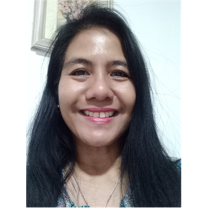
Eden H. Terol
Associate Professor Eden H. Terol, PhD, RPsy is a faculty member of the Applied Psychology Program at the University of the Philippines Diliman Extension Program (UPDEPP). Her recent study, “Youth Perspectives on Environmental Conservation and Ecotourism in the Sierra Madre Alta Ancestral Domain, Aurora, Philippines,” (in press), presents an empirically grounded model of Indigenous youth involvement in environmental conservation and stewardship. The study highlights youth as active agents in community-based ecotourism and sustainability initiatives. At UPDEPP, she serves as Coordinator of the National Service Training Program (NSTP), integrating psychosocial, developmental, and community-oriented approaches into student formation and civic engagement. Her work bridges research, teaching, and practice, with a focus on children and youth development, mental health, resilience, women, Indigenous communities, and culturally grounded psychological frameworks. Through her scholarship and leadership, she advances interdisciplinary dialogue and promotes contextually responsive approaches to psychological science, community well-being, and sustainable development.

Aria Wetzel
Aria Wetzel is an Environmental Studies major with double minors in Food Systems and Political Science at the University of Vermont. Originally from Upstate New York, she developed a passion for environmentalism through her childhood spent at her home on Saratoga Lake in New York. Since arriving at UVM, she has become deeply interested in community-based climate solutions. During her first semester, she joined the Climate Action Collective and has remained actively involved ever since, later becoming a Co-Director during her second year.
She has also contributed to the campus community as an Eco-Rep, Teaching Assistant, and Orientation Leader. Last summer, she had the incredible opportunity to live in Colorado and work at a nature-based summer camp, where she developed a deep passion for youth environmental education initiatives. She strongly believes that environmental stewardship begins with access to meaningful outdoor experiences. She is currently working as a summer communications intern for 350Vermont.
In the future, Aria hopes to continue her work in climate advocacy through grassroots movements. She is currently deciding between a career in environmental education and environmental law, with a particular interest in sustainable food systems and regenerative agriculture initiatives.
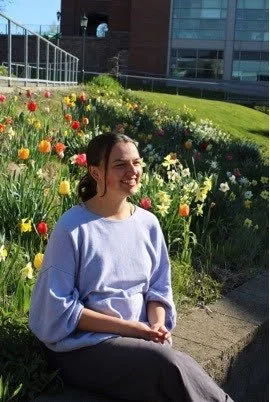
Emily Bennett
Emily Bennett is a Nutrition and Food Science major with a minor in Integrative Health at the University of Vermont. Originally from Lincoln MA, Emily grew up somewhat unaware of climate change's impact on the region. In 2019 however, she was diagnosed with various tick-borne infections. This validation of lifelong, debilitating symptoms kicked off her interest in the increased prevalence of zoonotic infections related to climate change and land-use. During her gap year, she focused on recovering from tick-borne infections and building impactful skills in civil disobedience. Working with the Sunrise Movement and Stop Private Jet Expansion, Emily hosted a protest at the MA Capitol Building in Boston to resist the largest proposed private jet expansion in New England’s History.
During her tenure at the University of Vermont, Emily has Co-Directed the Climate Action Collective, canvassed for VPIRG’s “Democracy Summer” Campaign in 2025, and worked as a Personal Care Assistant (PCA) to support a local woman on the Autism Spectrum. With all three leadership roles, Emily has cemented her passion for human connection. She is currently continuing to work as a PCA, and is in the process of starting her own Integrative Health Coaching business, pending her successful National Board Certification in July of 2027.
In the future, Emily hopes to work as a Nationally Board Certified Health and Wellness Coach supporting those with chronic illness diagnoses. She understands the power of personalized medicine and would love to integrate epigenetic testing and nervous system healing in her private practice. Emily sees a profound connection between nervous system health and planetary health. She argues that the first step in healing our relationship to the earth is healing our relationships with ourselves and our communities.